

Aus dem Schaum geboren (Born from the Foam), 2025
Sand, stone, oyster shell, and paint on canvas
90 cm x 130 cm
The work refers to the birth of Aphrodite from sea foam, while questioning the patriarchal structure of the myth in which her birth is triggered by the severed genitals of Uranus falling into the sea. The foam itself remains absent; instead, birth is evoked through material and color.
___________________________________
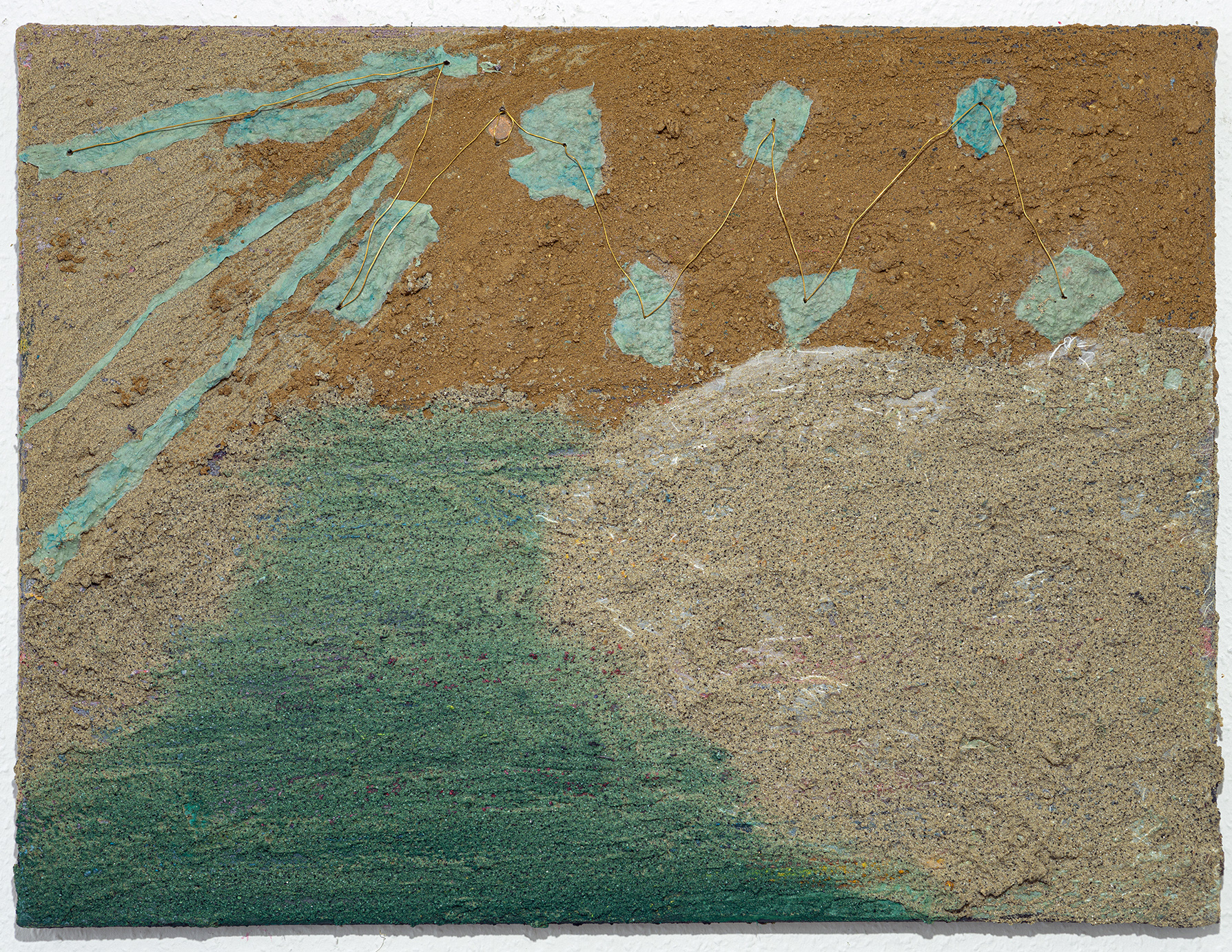
Der Moment, als Daedalus die Achtsamkeit der elterlichen Aufsichtspflicht verloren ging (The Moment When Daedalus Lost Sight of His Parental Duty of Care), 2025
Sand, basalt, wire, coin and paint on canvas
21.1 x 17.7 x 1.5 in.
The work questions the patriarchal framing of the myth of Daedalus and Icarus. Rather than placing responsibility on Icarus for flying too close to the sun, it shifts attention to the father who devised an extraordinarily dangerous means of escape. This shift in perspective changes not only the reading of the story, but also the chain of actions through which its outcome is understood.
___________________________________

Karya
Sand, Walnuts, Colour paint on canvas
20 x 30 cm
In the myth of Karya, Dionysus falls in love with her. When her two sisters interfere, he punishes them by turning them into rocks. Karya herself is transformed into a walnut tree. In another version, she first dies of grief over her sisters’ fate. In both accounts, the three women ultimately lose control over their own bodies through the actions of a male deity. The work questions this exercise of power and examines how patriarchal structures are perpetuated through mythological narratives.
___________________________________

Titel: Rouse thee now, stranger, to go to thy rest; thy bed is made.